Imagine running a pretty decent pizza place in Brooklyn. Your food is good, your prices aren’t ridiculous, and people who visit seem happy enough to come back.
But there’s a problem. Someone three blocks away searches for “best pizza near me” and finds four other restaurants before they find yours. One of them has hundreds of reviews. Another has beautiful food photos. The third has a Google listing that actually looks alive.
And you? You’re somewhere on page two.
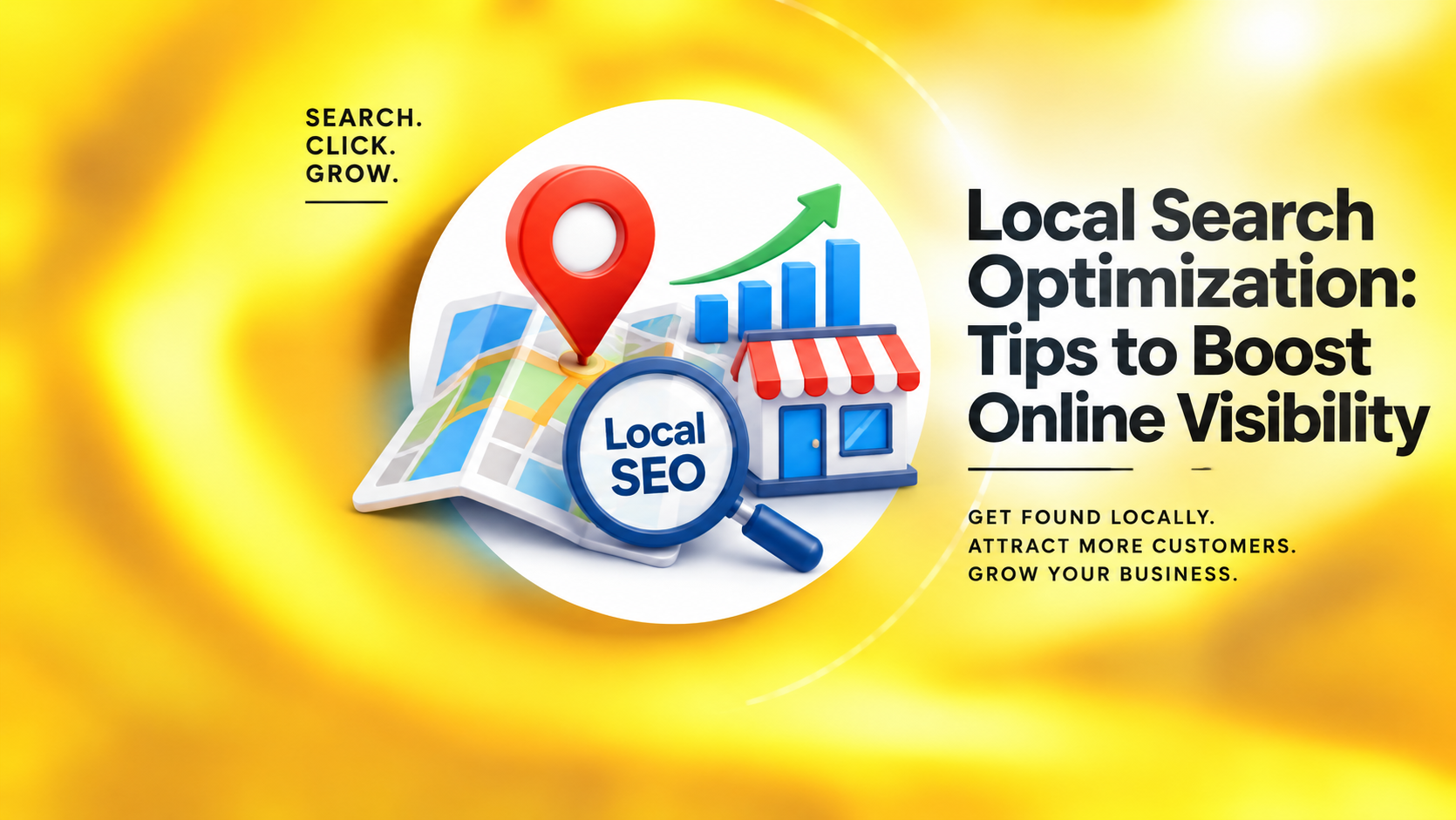
That’s why local search optimization deserves more attention. It helps businesses show up when people nearby are looking for the exact products or services they offer. And these aren’t random visitors killing time online. Many of them are looking to spend money.
Your Next Customer Might Already Be Searching for You
People don’t always plan their purchases days in advance. Sometimes they need a plumber because the kitchen sink has decided to flood. Sometimes they want a haircut before the weekend. And sometimes they’re simply hungry and unwilling to drive across town for a decent burger.
They search. They compare a few options. They make a choice.
BrightLocal’s 2026 Consumer Search Behavior research found that 84% of US consumers had searched online for a local business in the previous three months. It also reported that 73% started their most recent local business search on a mobile device.
That’s a pretty big audience to ignore.
The same research found that 75% of consumers make their local business decision within 30 minutes. So, while you’re busy wondering whether your website needs a redesign, someone nearby could already be choosing between you and your competitor.
Local SEO puts you in that conversation. Whether customers find you through Google Maps, organic search results, or other discovery platforms, your online presence needs to give them enough confidence to take the next step.
7 Things Your Business Should Be Doing to Improve Local Search Visibility
- Give Your Google Business Profile Some Attention.
When was the last time you opened your Google Business Profile and checked what customers actually see?
Not when you created it. Not when you uploaded your logo. Today.
Your profile might be showing an old phone number, incorrect business hours, or photos that look like they were taken on a flip phone. Meanwhile, your competitor has recent pictures, detailed services, and customer reviews coming in every week.
A little maintenance can go a long way.
Start with your primary business category. A roofing contractor shouldn’t simply choose “contractor” if a more specific category accurately describes the business. Add relevant secondary categories, too.
Then check your description, services, contact information, opening hours, and website link. Upload genuine photos. If you have seasonal hours, update those before customers turn up to a locked door.
Google looks at relevance, distance, and prominence when deciding which local businesses to show. Distance isn’t something you can change. The relevance and prominence of your business are areas where you can put in the work.
- Your Business Has One Identity. Your Listings Should Reflect That.
Here’s a small problem that can become surprisingly annoying.
Your website lists your business as ABC Plumbing LLC. Your Yelp profile says ABC Plumbing Services. An old directory has a phone number you stopped using last summer.
A customer finds all three. Which one should they trust?
This is why NAP consistency matters. NAP stands for Name, Address, and Phone Number. Your important business listings should contain accurate, matching information.
Go through Google, Yelp, Bing Places, Apple Business Connect, and relevant industry directories. Check the details rather than assuming everything is correct.
Did you move offices? Change your phone number? Update your business name? Make sure those changes reach your online listings, too.
And no, you don’t need to spend your entire afternoon submitting your business to 150 random directories. A few relevant, trustworthy listings are a much better starting point.
- Stop Chasing Broad Keywords That Don’t Bring You Customers
Let’s take two searches:
“Electrician”
“Emergency electrician in Dallas”
The first could come from someone researching electrical work, studying for an exam, or looking for a job. The second gives you a much clearer idea of what the person needs.
That’s the difference between broad search traffic and location-specific buying intent.
Your keyword research should reflect the way people actually look for services. Try combinations such as:
- Service and city: HVAC repair in Phoenix.
- Service and neighborhood: Dentist in Downtown Chicago.
- Urgent requirement: 24-hour plumber in Austin.
- Commercial intent: Affordable roofing contractor in Tampa.
- Specific service: Water heater installation in Denver.
Google Keyword Planner, Semrush, and Google Search Console can help you find search terms worth targeting.
Pay attention to search intent, too. Someone looking for “how much does roof replacement cost in Florida” might not be ready to book today, but they could become a customer after understanding their options.
You can create content for both types of searches. Just don’t cram location names into every sentence. Nobody wants to read a page that sounds like a GPS having a breakdown.
- One Location Page Isn’t Enough When You Serve Multiple Areas
A business operating across several cities needs to explain that clearly.
Take a roofing company serving Tampa, Clearwater, and St. Petersburg. If its website has one generic roofing page, visitors from those different areas might struggle to find relevant service information.
Dedicated location pages can help. But there’s a catch.
Changing “Tampa” to “Clearwater” in the same paragraph and publishing another page isn’t going to impress anyone.
Give each location page something worth reading. Mention the services available in that area, include genuine project examples, add relevant testimonials, and explain how customers can get in touch.
A Florida roofing company, for instance, could discuss roof inspections after severe weather, the types of roofing materials it offers, and relevant local building requirements.
Don’t invent local projects or pretend to have an office in a city where you don’t operate. Be honest about your service areas.
A useful location page should answer the questions someone in that area would actually have. If it does that, it’s already doing more than a page stuffed with city names.
- A Five-Star Rating Is Nice. Recent, Genuine Reviews Are Better.
Imagine you’re looking for a dentist. One clinic has a handful of reviews from three years ago. Another has recent feedback from patients talking about the staff, appointment experience, and quality of care.
Which one would you investigate first?
Reviews give potential customers a glimpse of what dealing with your business might actually be like. They can also help your business build online prominence.
You don’t have to make the process complicated. After completing a project or serving a customer, send a polite follow-up with a direct link to your review page.
Then actually respond to the reviews.
Thank people for positive feedback. If someone complains, resist the temptation to write a five-paragraph defence of your business. Acknowledge the concern, respond professionally, and offer to resolve the issue privately where appropriate.
And please, don’t buy reviews. A suspicious collection of perfect ratings can do more harm than good.
- Don’t Make People Work to Contact You
Getting your website onto the first page of Google is great. Getting visitors to leave because they can’t find your phone number? Not so great.
This happens more often than businesses realise.
A customer visits your website on their phone. The page takes forever to load. They try to find your services, but the navigation is confusing. Eventually, they give up and open another search result.
You’ve just lost a potential enquiry.
Check your mobile experience. Your phone number should be easy to tap. Your contact form shouldn’t ask for information you don’t need. Your service pages should explain what you offer without making visitors dig through five different sections.
There’s some technical housekeeping to do here, too.
Use responsive layouts, compress oversized images, maintain HTTPS, and monitor page performance. You should also implement LocalBusiness schema markup to help search engines understand your business details.
Schema can describe information such as your business name, address, telephone number, opening hours, and business type. Google provides documentation for implementing this structured data, and you can validate it using its Rich Results Test.
Just don’t expect schema markup to magically push your website to the top of Google. It’s one part of a much larger SEO effort.
- People Are Discovering Businesses Outside Google, Too
Google is important. Nobody’s arguing with that.
But customers don’t necessarily stick to one platform when researching a business. They might find a restaurant through Instagram, check its reviews on Yelp, and then search for directions on Google Maps.
AI-powered search tools are becoming another part of that discovery process.
This means your local presence shouldn’t depend entirely on one platform. Keep your social profiles active, share genuine examples of your work, and make sure your business information is easy to understand wherever customers find you.
For instance, a home renovation company could share before-and-after photos, explain common renovation mistakes, and answer questions about project costs. A restaurant could post its latest menu, introduce its chef, or show what a busy Friday night looks like.
It’s not about posting three times a day just to stay visible. It’s about giving people useful reasons to remember your business.
Is Your Local SEO Actually Bringing in Customers?
Let’s get one thing straight. A higher Google ranking is not the same as a successful SEO campaign.
You could rank for several local keywords and still receive very few enquiries. That’s why looking at rankings alone doesn’t tell you the whole story.
Keep an eye on these metrics:
| What to Track | Why It Matters |
| Google Business Profile views | Shows how often people discover your profile |
| Calls and direction requests | Indicates whether people are taking action |
| Local keyword rankings | Helps measure location-based search visibility |
| Organic traffic | Shows how many people reach your website through search |
| Form submissions | Tracks incoming business enquiries |
| Conversion rate | Shows how effectively visitors become leads |
Google Business Profile Performance, Search Console, and Google Analytics 4 are useful tools for monitoring these numbers.
Also, look at what happens after someone visits your website. Are they calling? Filling out a form? Booking an appointment?
If traffic is increasing but enquiries aren’t, don’t immediately assume you need more backlinks or another round of keyword optimization. The problem might be your website, your offer, your reviews, or simply how difficult you’ve made it for people to contact you.
Fix the actual problem.
Good Local SEO Should Do More Than Make Your Business Look Popular
Having a business that ranks on Google is nice. Having a business that gets enquiries from people who are actually looking for your services is much better.
That’s what local search optimization should work towards.
You don’t need to appear in every city across the country. You need to become easier to find in the places where you genuinely do business. Get your listings right, build useful location pages, encourage honest reviews, and make sure your website gives visitors a clear next step.
And don’t treat local SEO as a one-week project. Search visibility takes consistent work, regular updates, and a willingness to fix things when they’re not working.
At Xparro, we help businesses build SEO strategies around visibility, relevant traffic, and real growth. If your competitors are getting discovered by customers in your service area while your business is being overlooked, it might be time to change that.
Let’s get your business noticed for the right reasons.