Your marketing probably doesn’t need more content. It needs better direction.
One team is writing blogs. Another is running paid ads. Social is posting three times a week. SEO is chasing keywords. And somehow, all of them are talking to the same customer like they’ve never met. That’s where a simple framework can help.
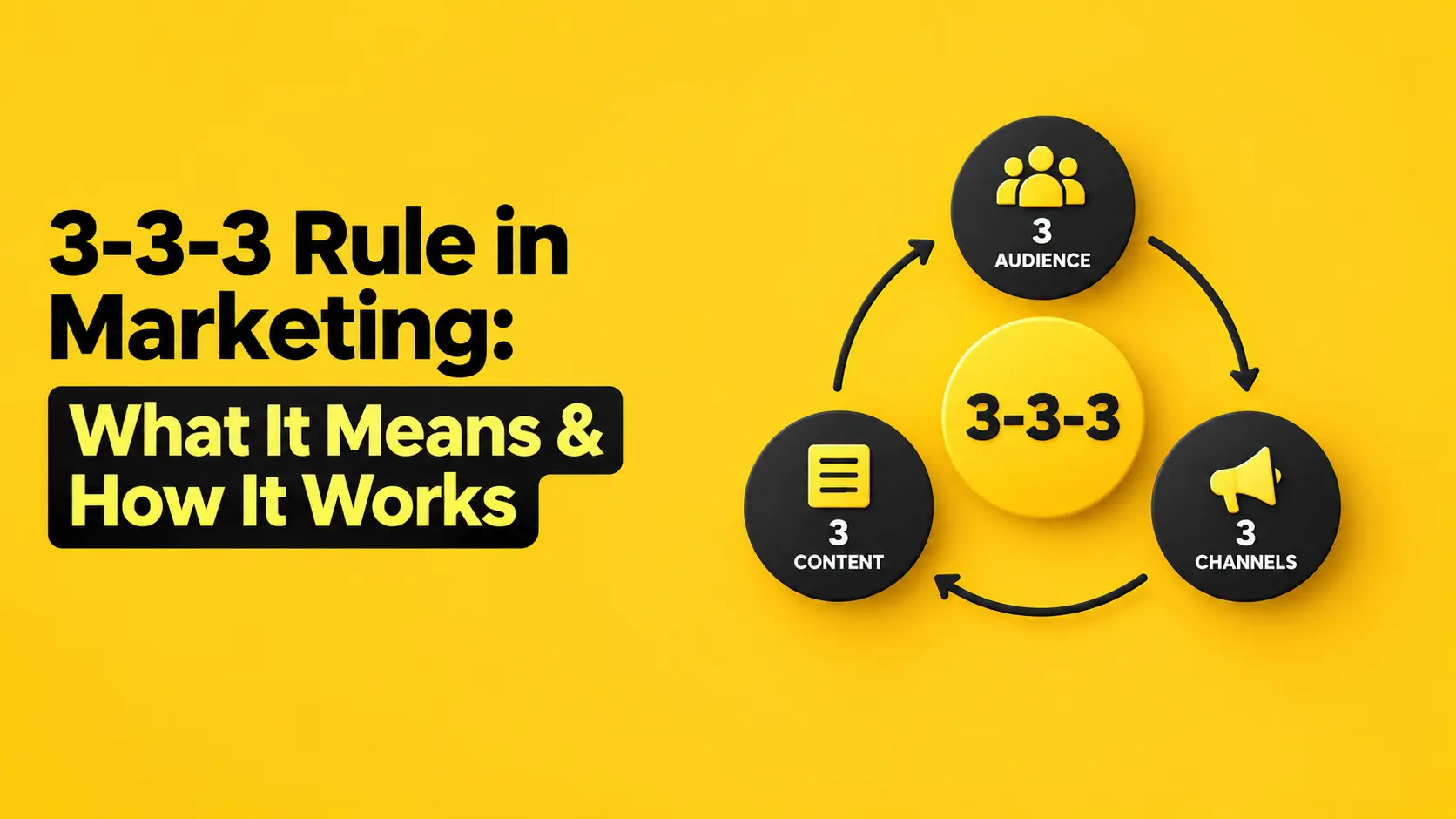
The 3-3-3 rule in marketing gives businesses a practical way to organize their marketing and content around three content types, three distribution channels, and three stages of the buyer journey.
It isn’t a magic formula. But it can stop your strategy from becoming a giant spreadsheet of random marketing activities.
Key Takeaways
- Marketing and content work better together when your SEO, social, paid campaigns, and content are all pulling toward the same goal.
- The 3-3-3 rule keeps things simple: three content types, three distribution channels, and three stages of the buyer journey.
- Your content creation strategy should match buyer intent, whether someone is discovering a problem, comparing solutions, or ready to buy.
- A smarter SEO marketing plan measures what matters, from organic traffic and leads to conversions, pipeline, and revenue.
What Is the 3-3-3 Rule in Marketing?
The 3-3-3 approach is built around three questions:
What should we create? Where should we distribute it? And where is the customer in their buying journey?
The original framework breaks this into:
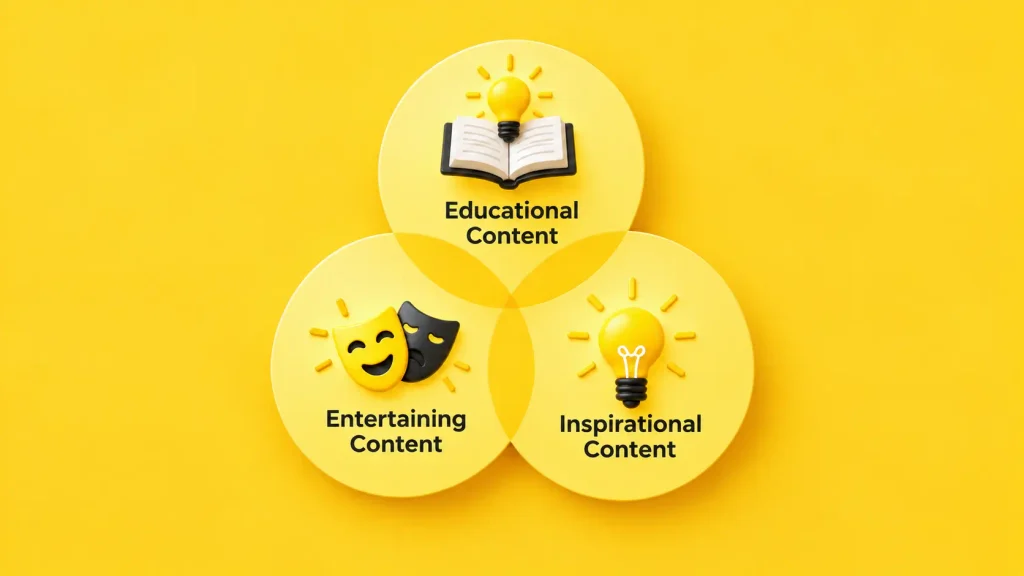
3 content types: Educational, inspirational, and entertaining
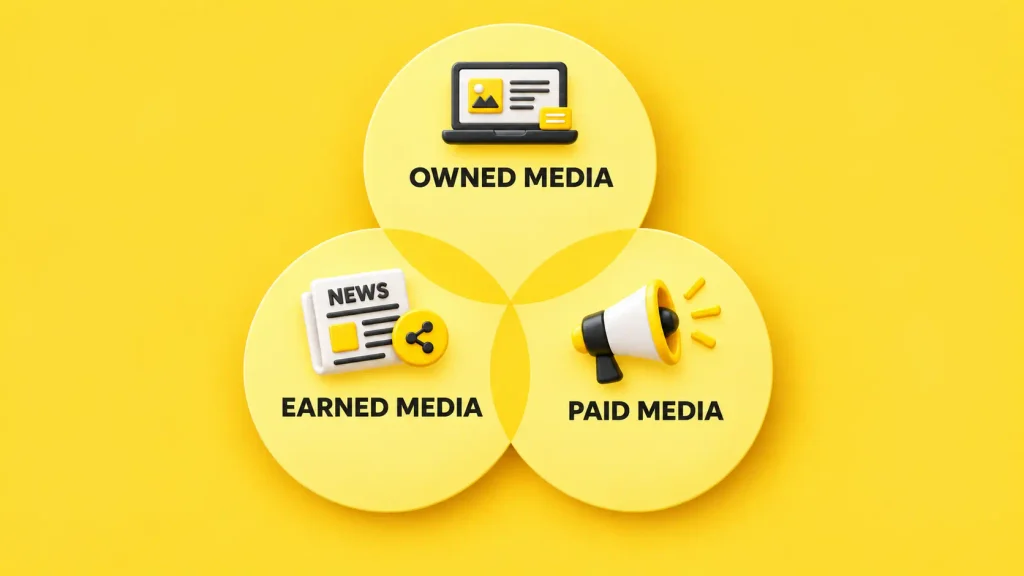
3 distribution channels: Owned, earned, and paid media
3 buyer stages: Awareness, consideration, and acquisition
Put those together and you get a simple system for planning your marketing and content instead of throwing ideas at the wall and hoping one sticks.
Start With Three Types of Content
Not every customer wants another 1,500-word blog post.
Some want an answer. Some want proof. Some just want something interesting enough to make them stop scrolling.
That’s why your content creation strategy needs variety.
Educational Content
This answers questions and solves problems.
Think:
- How-to guides
- SEO blogs
- Industry explainers
- Webinars
- Tutorials
- Research-driven articles
For example, a cybersecurity company could publish “How Zero-Trust Architecture Works” rather than another painfully vague post titled “Why Cybersecurity Matters.”
Educational content is particularly useful for SEO because it can target informational search intent and bring potential customers into your funnel before they’re actively shopping.
Inspirational Content
This is where you show people what’s possible.
Case studies, customer stories, testimonials, transformation stories, and expert opinions belong here.
Instead of saying, “Our SEO services deliver results,” show what changed for a client after fixing technical SEO, improving internal linking, or rebuilding its content architecture.
Proof beats promises.
Entertaining Content
Yes, B2B companies are allowed to have a personality.
Memes, short-form videos, behind-the-scenes content, clever commentary, and relatable industry posts can make your brand feel considerably less like a corporate instruction manual.
The goal isn’t to make everything funny. It’s to make your brand worth paying attention to.
Put Those Three Content Types on Three Channels
Creating good content is only half the job. If nobody sees it, congratulations, you’ve created a very well-written secret.
The 3-3-3 framework separates distribution into owned, earned, and paid media.
Owned Media
These are channels you control.
Think:
- Website
- Blog
- Social profiles
Your website and email list are especially valuable because you aren’t completely dependent on an algorithm deciding whether your audience gets to see your content.
Earned Media
This is attention you don’t directly buy.
Reviews, backlinks, PR mentions, customer recommendations, interviews, and organic brand mentions can all contribute to credibility.
For SEO, earned media can also support authority through relevant backlinks and third-party mentions.
Paid Media
This is where you pay to accelerate reach.
Google Ads, paid social, display advertising, sponsored content, and other PPC campaigns can put your message in front of a highly targeted audience quickly.
But don’t make the classic mistake of sending paid traffic to a generic homepage.
If your ad promises “Reduce SaaS Customer Acquisition Costs,” the landing page should continue that conversation, not suddenly start talking about your company history.
That’s where your marketing campaign strategy either works or falls apart.
Match Content to the Buyer’s Journey
A person discovering your brand for the first time isn’t looking for the same thing as someone comparing your service with a competitor.
So why give them the same content?
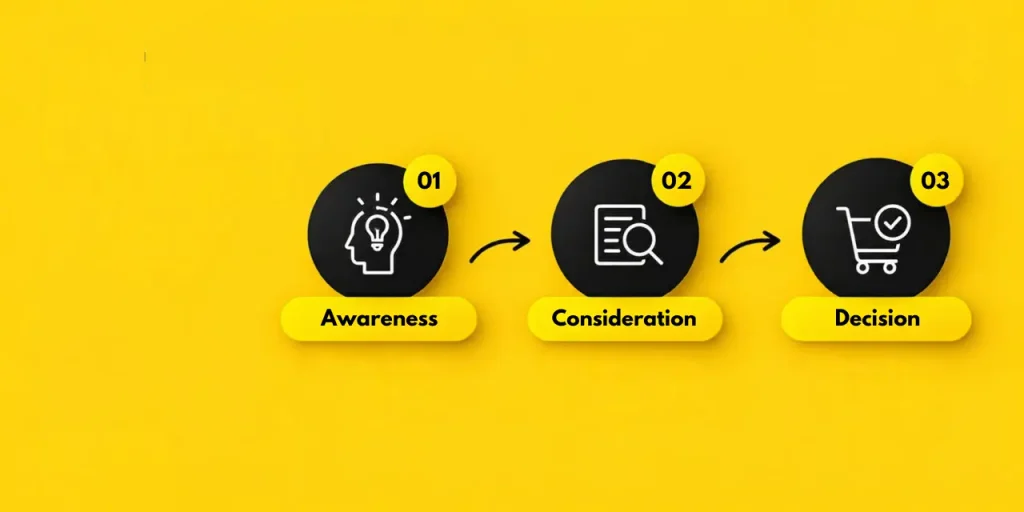
Awareness: “I have a problem.”
At this point, your audience may not even know what solution they need.
Create:
- Educational blogs
- Short videos
- Industry insights
- Social posts
- Beginner-friendly guides
Your job isn’t to aggressively sell. It’s to make the audience think “Wait. That’s exactly the problem we’re dealing with.”
Consideration: “Which solution should I choose?”
Now the buyer is researching.
This is where comparison pages, case studies, expert guides, product demos, ROI content, and detailed service pages become useful.
For example, someone searching “SEO agency vs in-house SEO team” isn’t casually browsing. They’re evaluating options. Your content should help them make that decision.
Acquisition: “I’m ready. Convince me.”
This is where the content becomes more conversion-focused.
Use:
- Pricing pages
- Service pages
- Testimonials
- Case studies
- Free consultations
- Product demos
- Strong CTAs
Don’t make someone dig through six pages to figure out how to contact you. They’ve already done the research. Let them take the next step.
Turn the 3-3-3 Rule Into an SEO Marketing Plan
Here’s where the framework becomes genuinely useful. Suppose you’re an American B2B SaaS company selling project management software.
Your three content types could be:
- Educational: Project management guides and workflow tips
- Inspirational: Customer success stories
- Entertaining: Workplace memes and short videos
Your three channels:
- Owned: Blog, email, LinkedIn
- Earned: Industry publications, reviews, backlinks
- Paid: Google Ads and LinkedIn Ads
Your three buyer stages:
- Awareness: “How to manage remote teams”
- Consideration: “Best project management software for remote teams”
- Acquisition: “Project management software pricing”
Now you have an actual content system.
And more importantly, your keyword strategy, content calendar, social posts, email campaigns, and paid media aren’t operating independently.
They’re supporting the same journey.
Don’t Let the 3-3-3 Rule Become Another Marketing Chore
Here’s the catch. Frameworks are useful until marketers start following them like commandments. You don’t need exactly three blogs, three ads, and three social posts every Tuesday because a blog told you so.
The point is focus.
Your strategy should answer:
- Who are we trying to reach?
- What does this audience need right now?
- Which content format makes sense?
- Which channel can reach them?
- What action should happen next?
- How will we know if it worked?
Then measure the answer.
Look beyond likes and impressions. Track organic clicks, engagement rate, conversion rate, MQLs, cost per lead, customer acquisition cost, pipeline, and revenue.
Google also recommends creating helpful, reliable, people-first content rather than producing content simply to manipulate search rankings.
That distinction matters. Because publishing 50 articles nobody needs isn’t a content strategy. It’s just 50 articles.
The Bottom Line
The best marketing and content strategies aren’t necessarily the ones with the biggest content calendars. They’re the ones where everything has a reason to exist.
Use the 3-3-3 framework as your starting point:
3 content types → 3 distribution channels → 3 buyer stages.
Then layer your SEO marketing plan, content creation strategy, and marketing campaign strategy on top of it. Educate people when they’re learning. Build trust when they’re comparing. Make conversion easy when they’re ready. And yes, throw in a funny LinkedIn post once in a while.
Your audience will appreciate the proof that there are actual humans behind the brand.
If your content, SEO, paid media, and social campaigns are all working separately, Xparro can bring them together into one strategy built around visibility, engagement, and measurable growth.
FAQs
- What is the 3-3-3 rule in marketing?
The 3-3-3 rule is a simple way to organize your marketing around three content types, three distribution channels, and three stages of the customer journey.
- How does the 3-3-3 rule help with content creation?
It stops your content calendar from becoming a random collection of blogs and social posts. You can create content based on what people need and where they are in the buying process.
- Can the 3-3-3 rule be used in an SEO marketing plan?
Absolutely. You can use it to connect search intent, content topics, distribution channels, and conversion goals, so your SEO isn’t just chasing traffic, but attracting people who may actually become customers.