Instagram trends move fast. One week, everyone is posting the same audio. The next, that audio is so overused that seeing it on a brand account feels like watching someone arrive at a party three hours late.
For marketers, the problem isn’t finding trends. It’s figuring out which ones are actually worth using.
August 2026 has made one thing pretty clear. Instagram is leaning harder into short-form video, original content, relatable storytelling, and formats people want to share, not just content that looks polished. Reels remain a major part of how people discover content, while carousels, original audio, memes, and low-production videos are finding plenty of room in the feed.
And the numbers back up just how big the opportunity is. Instagram has more than 2 billion monthly active users, while Meta says Instagram now has 3 billion monthly active users across the platform as of September 2025. People also reshare Reels more than 4.5 billion times every day across Meta platforms.
So, what’s actually trending on Instagram this August?
Let’s break it down.
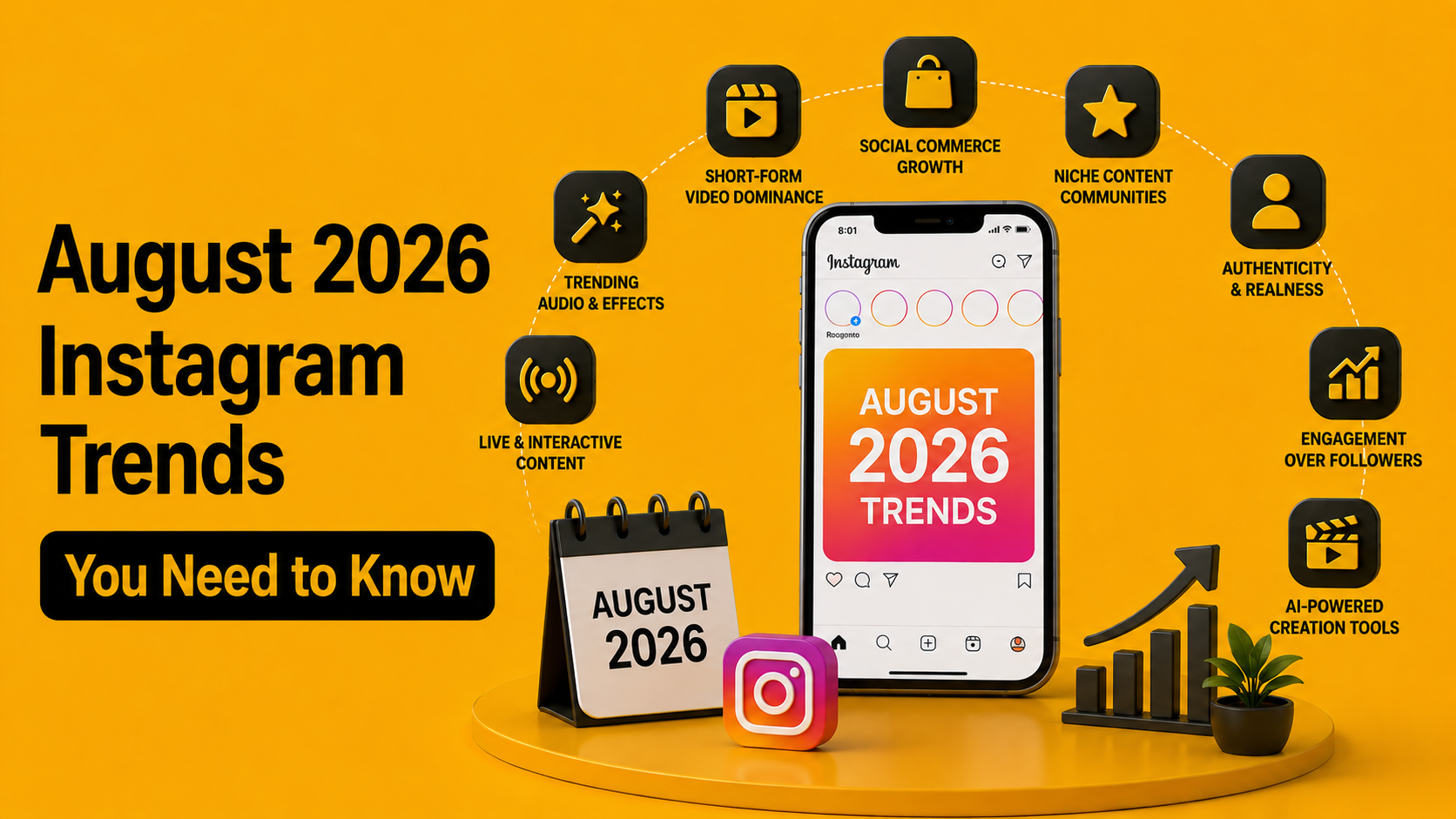
August 2026 Instagram Trends: The Quick Version
| Trend | What’s happening | Best brand use |
| Low-production Reels | Simple, single-take videos are gaining traction | Founder content, BTS, quick takes |
| Absurdist memes | Surreal formats are spreading quickly | Relatable brand humor |
| Tribute carousels | Nostalgic, emotional multi-slide posts are trending | Community, storytelling, milestones |
| “August” | Seasonal nostalgia is back | Summer recaps, lifestyle content |
| “And for the lady…” | Products are revealed for specific audiences | Product positioning |
| “My Biggest Flex” | Creators are showcasing skills and capabilities | Expertise and service promotion |
| “Let me guess…” | Relatable traits drive recognition | Audience-focused content |
| Trending audio | Popular songs continue to fuel Reels | Reach and cultural relevance |
| Original content | Instagram is increasing original-content recommendations | Build unique brand IP |
| First Draft | Instagram is simplifying Reel editing | Faster content production |
The Biggest Instagram Trends of August 2026
- Low-production Reels are having a very good month
Remember when every brand Reel needed perfect lighting, cinematic transitions, professional cameras, three people behind the camera, and roughly 47 rounds of approval?
Yeah. Instagram seems increasingly interested in something else.
Content that feels like content.
One of the clearest patterns emerging this month is the rise of low-production, single-take, or minimally edited Reels. Creators are using simple setups, direct-to-camera delivery, basic lip-syncs, and quick visual jokes instead of trying to make every Reel look like a commercial.
New Engen’s August trend report highlights this shift, including a single-take truck-driver lip-sync Reel that reportedly reached 336 million views. The same report points to documentary-style and low-production formats gaining traction alongside more polished content.
That’s important for brands because low production doesn’t necessarily mean low effort.
The difference is intentional simplicity.
A founder sitting at their desk and saying, “Three things I wish I knew before launching this business,” can work better than a beautifully produced 30-second video that takes ten seconds to get to the point.
How brands can use it
Try:
- A founder or employee speaking directly to camera
- A one-take product demonstration
- A behind-the-scenes clip with text overlays
- A quick reaction to something happening in your industry
- A “POV” format that doesn’t require elaborate production
- A simple workplace moment your audience will recognize
The goal isn’t to make your content look unfinished. It’s to make it feel native to Instagram. And that’s a useful distinction.
- The “Netflix Documentary” trend is turning everyday drama into prestige TV
What happens when a completely ordinary problem gets treated like it’s the subject of a six-part Netflix docuseries?
Apparently, Instagram wants to watch.
The “Preparing for my Netflix Documentary” trend has been making the rounds on TikTok and Instagram Reels, with creators sitting down for a mock documentary interview, fixing their hair, adjusting a microphone, or simply staring into the camera while dramatic music plays. The joke comes from the contrast: the production feels serious, but the “documentary” is about something hilariously mundane.
The format typically uses Duomo’s “On a Mission” as the dramatic backdrop. Creators add text such as “Preparing for my Netflix documentary about surviving the worst group chat” or turn an everyday workplace headache into a supposedly career-defining scandal.
And brands have plenty of room to play with it.
How brands can use it
The trick is specificity.
Don’t make a Reel that says “Preparing for my Netflix documentary about running a business.” That’s too broad. Try “Preparing for my Netflix documentary about the client who said ‘just one tiny revision.’”
Or “Preparing for my Netflix documentary about the espresso machine that survived our first year.” Or “Preparing for my Netflix documentary about how our founder turned a kitchen experiment into a six-figure business.”
The last one shows why this trend can work particularly well for brands: it can turn a real brand story into entertainment without making it feel like a case study.
You can also use archival footage, old product photos, behind-the-scenes clips, founder footage, or even a dramatic close-up of the product after the opening shot. The trend has already been identified as a format brands can adapt, particularly for founder stories, product origins, and niche inside jokes.
And there’s another reason I’d keep this trend in our August roundup: it’s a cross-platform format. New Engen specifically notes that the Netflix Documentary chair-sit format crossed over from TikTok and was independently gaining traction on Instagram.
- Nostalgia is driving the carousel comeback
Instagram may be a video-heavy platform, but August has also been a surprisingly strong month for carousel storytelling.
One major example is the rise of nostalgic tribute carousels using Olivia Rodrigo’s “u + me = <3” and “Stupid Song.”
New Engen identifies both tracks as drivers of a broader tribute-carousel trend, while other August trend reports point to nostalgic photo dumps and emotionally driven carousel content gaining traction.
The format is simple:
A series of photos, screenshots, memories, or moments builds an emotional story across multiple slides.
There’s no complicated production. No talking head. No elaborate hook. Just a reason to keep swiping. And that’s exactly why brands shouldn’t write carousels off as “old Instagram.”
And the numbers suggest carousels aren’t simply hanging around; they’re becoming more useful for certain types of engagement. Metricool’s 2026 Instagram study found that brands published 24% more carousels this year, while carousels generated 9× more saves than single-image posts.
The brand opportunity
Nostalgia can work particularly well for:
- Hospitality brands
- Fashion
- Food and beverage
- Entertainment
- Education
- Local businesses
- Consumer brands
- Community-based organizations
A restaurant, for example, could create:
“10 moments from our first year that we’ll never forget.”
A fashion brand could do:
“The looks that defined our summer.”
A SaaS company could even get in on it:
“Things we used to think were normal before we automated them.”
The key is that the carousel needs a story, not just a collection of images.
That’s also why format choice matters. Socialinsider’s 2026 analysis found that carousels are particularly effective at driving saves, while Reels are stronger at generating shares. So the question isn’t whether Reels or carousels are “better.” It’s what action you want the content to drive.
- “August” is back because the internet apparently has seasons now
Some trends are predictable.
Taylor Swift’s “august” returning to Instagram every August is one of them.
Buffer included the track among its leading Instagram sounds for August 2026, noting that creators are using it for summer recaps, “life lately” content, sunsets, and end-of-season moments.
This is a good example of a seasonal recurring trend.
Not every trend needs to be brand new. Some trends return because they are culturally associated with a specific moment. That’s useful because it gives marketers something most trends don’t:
Predictability.
How brands can use recurring trends
Think beyond the obvious.
Instead of posting “August recap,” A brand could turn the seasonal audio into “The August moments that made us stop scrolling.”
Or: “August at [Brand Name]: 12 seconds of summer.” Or, for a service business: “What our team was up to this August.”
The lesson isn’t “use Taylor Swift.”
It’s to watch for recurring cultural moments that your audience already recognizes.
- “And for the lady…” turns product positioning into entertainment
Another notable August format is the “And for the lady…” trend, driven by Noah Kahan’s End of August.
Buffer identifies it as a format where creators reveal the perfect product, place, or experience for a specific type of person.
This one is particularly interesting for marketers because it’s basically product positioning disguised as a trend.
Instead of saying, “Our product is perfect for busy professionals.” You can show the person first and reveal the product second. That small change makes the content feel less like an advertisement.
Example
A coffee shop:
“And for the lady who has three meetings before 10 a.m…”
Cut to:
Your largest iced coffee.
A hotel:
“And for the lady who said she needs a vacation but refuses to take PTO…”
Cut to:
Your weekend getaway package.
A fitness brand:
“And for the lady who wants to work out but hates working out…”
Cut to:
A beginner-friendly class.
It’s a classic marketing principle wrapped in a social-native format:
Show people that you understand them before you try to sell to them.
- “My Biggest Flex” is turning expertise into content
Shakira’s “She Wolf” is another August trend worth watching.
Creators are using the audio with the “My biggest flex” format to highlight their skills, capabilities, or different roles. Buffer lists it among August’s trending Instagram sounds.
- For creators, it’s a fun personality trend.
- For businesses, it can become a positioning tool.
Instead of bragging about your company in a traditional case-study format, you can show the things your team does exceptionally well.
For example:
“My biggest flex is that you can hire me as your…”
- Strategist
- Copywriter
- Creative director
- Paid media nerd
- Analytics person
- Last-minute problem solver
A B2B brand could even use it to show capabilities customers may not know it offers.
Why this format matters
People don’t always understand the full scope of a business. They see the product. They don’t necessarily see the expertise behind it.
Trend formats like this give brands a reason to show their range without turning the Reel into a corporate brochure.
- “Let me guess…” content is built for relatability
Later’s August roundup highlights another format based on “Let me guess…”, where creators identify someone’s interests, habits, or personality traits using visual clues and screenshots.
This format taps into something social media has always been very good at: making people feel seen.
The viewer watches and thinks, “Wait. That’s literally me.” That’s powerful because relatable content has a natural reason to be shared.
For brands, try this:
A coffee brand: “Let me guess. You said you’d only have one coffee today.”
A marketing agency: “Let me guess. You have 17 tabs open and still can’t find the campaign report.”
A gym: “Let me guess. You bought the workout clothes before deciding to actually work out.”
The product isn’t necessarily the joke. The audience is. And that’s usually a better place to start.
- Trending audio is still important, but don’t build your entire strategy around it
Let’s settle this once and for all:
Trending audio still matters. But blindly attaching a popular sound to a Reel doesn’t make the Reel good.
Buffer’s August roundup lists tracks ranging from Taylor Swift’s august and Noah Kahan’s End of August to Shakira’s She Wolf, Steve Lacy’s oh yeah?, Bad Bunny’s EoO, and several original sounds.
SocialPilot’s August roundup similarly highlights August, End of August, She Wolf, oh yeah?, EoO, and other sounds as part of the month’s trend cycle.
But there’s an important catch for brands. Not every trending sound is commercially usable.
Later specifically warns that even some sounds labeled “original audio” aren’t technically royalty-free, and recommends that brands running sponsored content or paid ads use Meta’s commercially licensed music options when appropriate.
So before your social team says, “This audio is trending! Post it!”
Ask:
- Is it appropriate for our audience?
- Does the trend fit our brand?
- Is the audio available for our account type?
- Can we use it commercially?
- Does the trend actually improve the idea?
If the answer to number five is no, skip it.
- Original content is becoming more important
Here’s one of the biggest strategic takeaways from August that has nothing to do with a specific meme.
Originality matters.
Meta said in January 2026 that it had increased the prevalence of original content in Instagram recommendations in the U.S. by 10 percentage points in Q4 2025, with 75% of recommendations coming from original posts at that time.
Add Visual Chart: 75% of Instagram recommendations were coming from original posts.
That’s a significant signal for brands.
The social strategy of:
Find a viral post → download → add your logo → repost
isn’t exactly a long-term growth strategy. And while reacting to trends is still valuable, brands need to add something of their own.
That could be:
- A unique opinion
- Original footage
- A company-specific joke
- An employee’s perspective
- A customer story
- Proprietary data
- A new interpretation of an existing trend
Think of trends as templates, not finished products. The trend gets you into the conversation. Your perspective is what gives people a reason to remember you.
- Instagram is making Reels easier to create
Instagram also made an interesting product move this month.
On August 25, Instagram introduced First Draft, a Reels feature that automatically trims selected clips into a rough-cut Reel, removing pauses and pulling together useful sections. The tool is designed to create a starting point that users can continue editing before publishing.
Instagram’s First Draft feature is designed to turn raw clips into a rough-cut Reel, helping creators get from footage to an editable first version faster.
And there’s a useful takeaway here:
Instagram is lowering the production barrier. That matters because the platform isn’t asking every creator to become a professional editor.
It’s making it easier to go from “I have footage.” to “I have something I can actually post.”
For businesses, that’s an opportunity to create more content from material they’re already capturing.
A sales team can record customer-event footage. A founder can record a few talking-head clips. A restaurant can capture behind-the-scenes footage throughout the week. A creative team can collect raw product footage.
Then the editing process becomes less of a bottleneck. The bigger trend isn’t First Draft itself. It’s content velocity. And that race is already visible in publishing behavior. Metricool’s 2026 study found that the volume of Reels published increased by 35%, alongside a 24% increase in carousel publishing.
The easier it becomes to create and edit video, the less defensible highly polished production becomes.
Your competitive advantage shifts toward:
ideas + speed + relevance + originality.
- Cross-platform trends are arriving on Instagram faster
Another pattern worth watching is how quickly trends move between platforms.
Later’s August roundup includes formats that have crossed over from TikTok, while New Engen specifically calls out the migration of formats such as the “Netflix Documentary” chair-sit concept onto Instagram.
This means social teams can’t really afford to monitor Instagram in isolation anymore.
A trend may start on TikTok. A creator may remix it on Instagram. A brand may adapt it for LinkedIn. Then the format becomes part of broader internet culture.
But here’s where businesses can get ahead:
Don’t wait until the trend is everywhere on Instagram.
Watch for formats that are beginning to show up across platforms, then figure out whether there’s a brand-relevant version before the format becomes completely saturated.
The sweet spot is recognizable but not exhausted.
What these August Instagram trends actually tell us
If you look at all these trends individually, they can seem random.
A Taylor Swift song.
A bizarre Bangladesh joke.
A sentimental carousel.
A single-take truck-driver Reel.
A product reveal.
A “My Biggest Flex” video.
A new editing feature.
But together, they tell a much more interesting story. Instagram is becoming less about polished content and more about recognizable ideas. People don’t necessarily need another beautifully shot video.
They need something they can understand quickly. Something that makes them laugh. Something that makes them feel seen. Something that gives them a reason to send it to a friend. Something that makes them stop because the first two seconds feel familiar.
And, increasingly, something original.
Meta’s own recommendation data supports the direction: the company reported that 75% of Instagram recommendations in the U.S. were coming from original posts after a 10-percentage-point increase in original-content prevalence during Q4 2025.
That’s a useful shift for brands that have been treating Instagram like a digital billboard. It isn’t. It’s a recommendation engine. And recommendation engines need content people actually want to consume.
What should brands do with Instagram trends in August 2026?
The worst possible response to a trend report is:
“Okay, let’s recreate all of these.” Please don’t. Instead, use a simple filter.
- Does the trend fit your audience?
A viral meme isn’t automatically relevant to your customers. If your audience won’t get it, skip it.
- Can you add a brand-specific angle?
If the only thing your account adds is your logo, you haven’t really adapted the trend.
You’ve copied it.
- Can you make it quickly?
Trends have expiration dates.
If it takes three weeks to get a Reel approved, you’re probably not trend-jumping. You’re trend-archiving.
- Is there a business objective?
Not every Reel needs to sell. But it should do something. Something that builds awareness, shows personality, educates, creates engagement, drives profile visits, starts a conversation, and strengthens brand recall.
- Can the idea work without the trend?
This is the big one. If the trend disappears tomorrow, would the content still make sense?
If yes, you’ve probably created something useful. If no, you’ve created a disposable post. And sometimes that’s fine. Just know the difference. The Instagram trend to watch isn’t a sound
If there’s one takeaway from August 2026, it’s this:
Stop treating Instagram trends as a list of sounds. The bigger trends are behavioral.
People want content that feels:
- Original
- Relatable
- Fast
- Easy to understand
- Emotionally recognizable
- Native to the platform
- Worth sharing
The audio is often just the wrapper. The real trend is the format underneath it.
That’s why a brand shouldn’t ask “What song is trending?” The better question is “What kind of content are people repeatedly choosing to watch, share, save, and recreate?”
That’s where the useful insight is.
Final take: Don’t chase every Instagram trend. Find your version of it.
August 2026 isn’t showing us that brands need to post more. It’s showing us that brands need to participate better.
Use the “And for the lady…” format to sharpen your positioning.
Use “My Biggest Flex” to show expertise.
Use nostalgia-driven carousels to tell stories.
Use absurdist memes when your brand voice can actually carry the joke.
Use low-production Reels when a phone camera gets the job done.
Use trending audio when it genuinely improves the idea, and when you have the rights to use it.
And keep an eye on Instagram’s own product changes, because tools like First Draft are making video creation faster and easier.
Most importantly, don’t confuse being early with being relevant.
A trend is useful when it gives your brand a better way to communicate something your audience already cares about. Otherwise, it’s just another sound in your saved folder. And let’s be honest, you have enough of those.