Have you ever published a fantastic blog only to watch it disappear into Google’s version of a black hole? You are not alone, because even though millions of pages are indexed every single day, but not many make it to page one.
That is not because the pages do not contain good information, but more so because they do not have the authority that comes with it.
Google does not only assess your written content; rather, it assesses whose trust is put in the written content. That is where the backlinking comes in.
This guide will cover everything about backlinks and will take a look at the actual strategies that marketers, SEO agencies, and SaaS companies use to get high-quality backlinks.
Let’s start with the basics before diving into the tactics that actually work.
What Are Backlinks?
A backlink is a hyperlink from another website pointing to yours. In other words, each backlink is a recommendation. Whenever a reputable website adds a link to your content, search engines perceive it as an indicator of your page being valuable.
But all votes are equal in no way.
Backlinks from Forbes or HubSpot have much more effect on ranking positions compared to tens of low-quality, spammy links from poor directories.
So, SEO in the modern world is less about getting tons of links and more about getting the right ones.
Why Are Backlinks Still Important for SEO?
Even after hundreds of updates, backlinks remain one of the key ranking signals used by Google.
The Google ranking algorithms consider a variety of signals while evaluating content quality, and authoritative links remain an essential part of building authority.
The importance of backlinks lies in their ability to:
- Improve keyword rankings
- Increase Domain Authority (or Domain Rating)
- Get pages indexed faster
- Establish topical authority
- ive referral traffic
- Build EEAT (Experience, Expertise, Authoritativeness, Trustworthiness)
Consider two blogs covering the same topic. They are both written in a good manner, both load fast and both cover search intent.
But the deciding factor becomes authority, and backlinks are one of the clearest indicators of authority.
What Makes a Quality Backlink?
One good backlink can outperform fifty mediocre ones. This is what differentiates quality links from those that aren’t worthwhile.
Authority
Backlinks from authoritative sites have a lot more power to rank your site higher on search engines.
For instance, a backlink from a leading publication in the industry has much more power than one from a new website with no organic traffic.
Relevance
The surrounding text matters.
If you have a digital marketing company, it makes sense for you to have a backlink from an SEO site rather than a cooking blog.
Google is now assessing the topic-based relationship between websites more often.
Natural Placement
Links placed naturally within quality content are always stronger compared to links that are inserted into footers, sidebars, or author bios.
Natural links show authenticity compared to unnatural links.
Traffic Potential
Not all links help with SEO ranking. There are some links that actually bring visitors in addition to improving SEO ranking.
Such backlinks tend to be very powerful.
Anchor Text
Anchor text helps Google understand what the backlinked page is all about.
For example, instead of ‘Click here’ use ‘Learn how to get backlinks for your site’.
How Google Evaluates Backlinks
Google has become very advanced in detecting artificial patterns of backlinks.
Modern algorithms analyze:
- Topical relevance
- Velocity of links
- Variation of anchor text
- Editorial context
- Spam characteristics
- Site quality
- User engagement
What this means is that purchasing thousands of backlinks not only fails to help, it can actually hurt your position.
The current best practice is getting links you would have received regardless of Google.
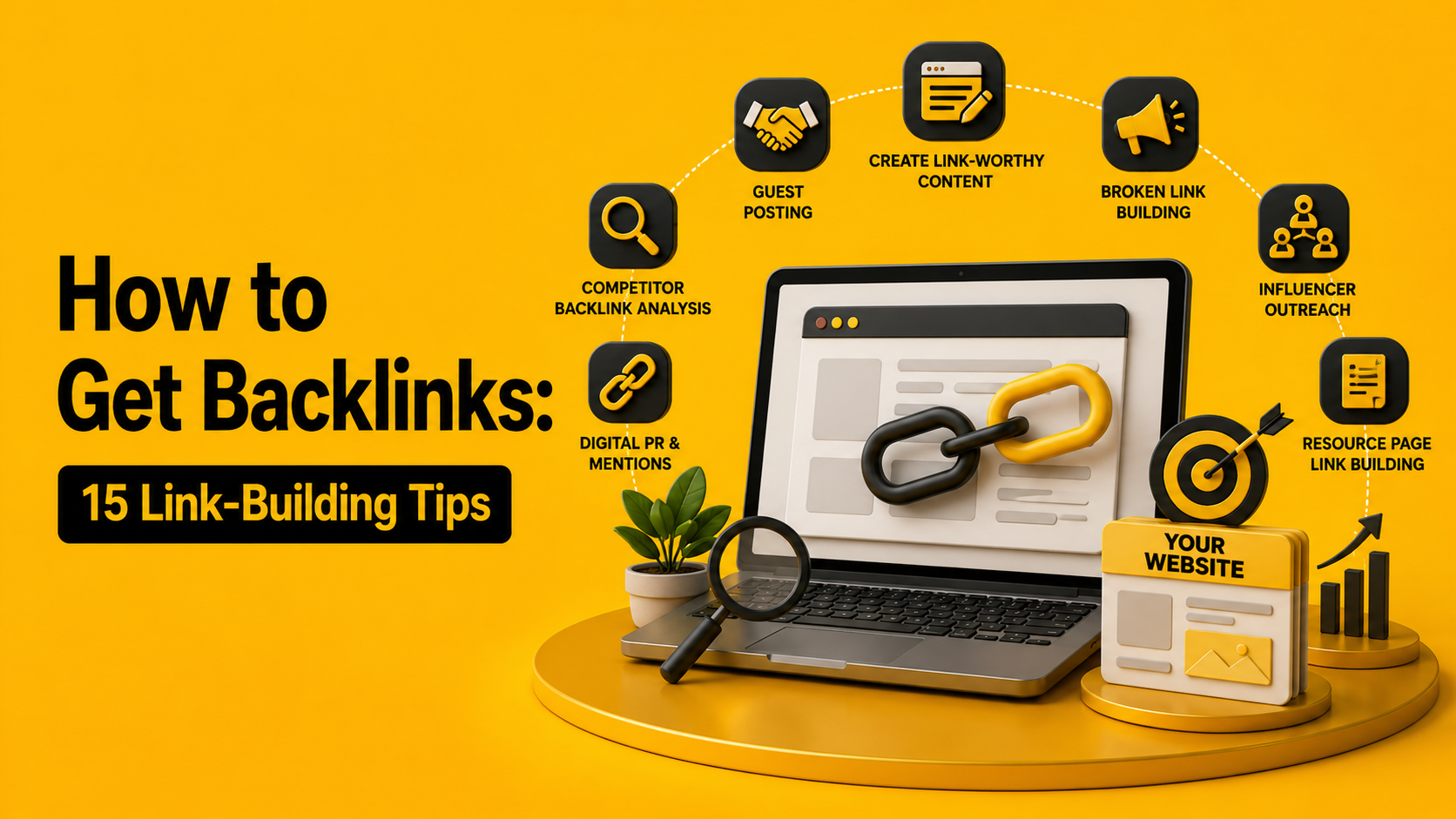
How to Get Backlinks: Proven Strategies That Work
Let’s move beyond theory.
Here are some practical methods used by successful SEO agencies and large corporations.
- Publish Original Research
Unique data is the ultimate backlink magnet on the web.
Every day journalists, bloggers, scientists, and marketers need to find trustworthy statistics to prove their points.
But don’t recycle what others already published. Make your own original research.
Possible ideas for the unique data you can gather:
- Industry surveys
- Behavioral studies
- Your SEO experiments
- Marketing trends
- AI usage
- Insights into consumers’ minds
Imagine that your agency has researched 500 websites and found out that pages with less than two seconds loading speed get 27% more conversions.
It is a piece of data nobody else possesses. References to your research will naturally generate
- Create Linkable Assets
All pages don’t deserve backlinks. There are some formats that automatically generate links because they are helpful. These are known as linkable assets.
Some examples are:
- Ultimate Guides
- Statistics pages for the industry
- Calculators
- Estimator tools
- Templates
- Checklists
- Comparison charts
- Infographics
- Frameworks
Consider Hubspot. A number of the most successful pages on Hubspot are not sales pages but resources. Writers link because of the solutions they provide.
Always ask yourself, “Would someone else refer to this page instead of creating it?” If the answer is yes, then you have created a linkable asset.
- Build Statistics Pages
The statistics pages keep earning backlinks year after year. The reason behind this is the need for data from writers.
Instead of going through a number of sites, they link to one comprehensive page for all their requirements.
For example:
SEO Statistics 2026
Some of the sections are:
- Organic search statistics
- AI Search Adoption
- Local SEO growth statistics
- Voice search statistics
- Mobile stats
- Conversion rates
Keep updating this page each year. Over time, it becomes a backlink-generating machine.
- Use Digital PR Instead of Traditional Link Building
Cold e-mailing random bloggers asking for backlinks doesn’t work anymore. Digital PR works much better.
This method consists of creating stories that media outlets would actually like to cover.
Such stories include:
- Original research
- Industry trends forecasts
- Unusual achievements of a company
- Market trends reports
- Surveys
- Expert opinions
Media outlets need sources to support their stories.
And if your content helps them tell a story, then linking to it becomes a natural thing to do. Instead of asking someone to link to you, create something worth covering.
- Turn Case Studies Into Link Magnets
Results always speak louder than words.
So don’t say,
“Our SEO approach improved traffic.”
Show it.
The case study must include:
- Problem
- SEO approach
- Technical details of the SEO process
- Timeframe
- Result
- Lessons learned
Example:
“How We Gained 214% Organic Traffic Growth in 8 Months Without Paying for Backlinks.”
This kind of content will appeal to bloggers and other industry publications that search for credible examples.
- Reclaim Unlinked Brand Mentions
Sometimes people already mention your brand but forget to link. This is one of the simplest backlink strategies there is.
With tools such as Google Alerts, Ahrefs, or Semrush, search for brand mentions within:
- Your company
- Your CEO
- Your products
- In-house frameworks
- Studies or research reports
Wherever an article mentions your organization but fails to provide any kind of link, reach out via email asking:
“Just wanted to say thank you for the mention of our study. Is it possible to include a link to the full report?”
Since they have mentioned your brand already, chances of success with this strategy will always be much higher than with cold outreach.
- Guest Posting Done Right
Guest posting hasn’t died, it just wasn’t being done properly.
Guest posting that involves publishing poor quality articles across a host of websites purely for backlinks was exactly the type of strategy that Google discouraged.
Instead, try to seek out sites that are reputable within your industry.
An ideal guest post should:
- Help solve a reader’s issue
- Provide insights, data, and experience that the site lacks
- Mention your website when necessary, not constantly
- Not be recycled content
One well-placed guest article on a respected industry website can outperform dozens of links from low-quality blogs.
Even better, it builds both backlinks and brand credibility.
- Leverage Broken Link Building
Broken link building has been around for years, but it still works when done strategically.
The concept is simple:
Find broken links on authoritative websites, create (or identify) content that matches the original intent, and suggest your page as a replacement.
Website owners appreciate it because you’re helping improve their user experience.
Here’s the process:
- Find broken links using tools like Ahrefs, Semrush, or Screaming Frog.
- Analyze what the dead page originally covered.
- Create a better, updated version of that content.
- Reach out to the website owner with a polite email explaining the issue and offering your resource.
Your email shouldn’t sound like a sales pitch. It should sound like you’re helping them maintain a high-quality website.
- Analyze Your Competitors’ Backlinks
One of the fastest ways to discover backlinks quickly is as simple as analyzing where your competitors get their backlinks.
SEO tools like Ahrefs, Semrush, and Moz give you an opportunity to analyze backlink profiles of your competitors in no time.
Check for:
- Industry blogs with links to multiple competitors
- Resource pages
- Guest posting opportunities
- Directories of businesses
- Industry associations
- Newspaper mentions
- Case studies referencing the brand
When multiple competitors managed to earn backlinks from one particular website, it most likely means that website will also accept quality content on your topic.
It’s not a question of imitating your competition, rather, it’s a matter of finding opportunities they’ve already proven to be successful.
- Create Free Tools That Solve Real Problems
It’s natural to link to tools that ease people’s job.
Consider how many times marketers promote:
- ROI calculator
- SEO audit tool
- Keyword generator
- Website speed checker
- UTM builder
Those resources keep getting more and more backlinks years after publication.
Even a simple calculator may turn into something valuable when it solves a specific issue.
Here are just a few examples of free tools a digital marketing agency can offer:
- PPC budget calculator
- SEO ROI calculator
- Website Cost Estimator
- Content Calendar Generator
Interactive tools often outperform standard blog posts because they provide immediate value.
- Build Resource-Worthy Content
Resource pages are found on many websites which suggest articles and other sources that can prove valuable.
They include:
- Universities’ websites
- Governmental sites
- Trade organizations
- Professional organizations
- Marketing communities
What you need to do is create resource worthy of being suggested.
Examples of backlink-worthy resources are:
- Beginner tutorials
- Industry-specific glossaries
- Templates for downloading
- Checklists
- Researches
- Educational material
After publishing your material, contact relevant websites with a suggestion of how you can help their readers with your content.
If your content is really worth it, links will come as a result.
- Become a Trusted Source for Journalists
Journalists are always looking for experts willing to share their opinion on different topics.
If you become such an expert, chances are high that you will start receiving backlinks from credible media sources.
Answer quickly to requests to comment on:
- SEO trends
- Digital marketing
- AI integration
- Customer psychology
- Development of small businesses
- Statistics of industries
Quotes based on experience and facts have much bigger chances of getting published. And that’s not about promotion, it’s about authority.
- Appear on Podcasts and Industry Webinars
Not every backlink comes from written content.
Podcast guest appearances will usually have links to your website, social media pages, or resource pages within the episode description.
Aside from being great for SEO, appearing on podcasts helps build your personal and brand authority.
Share:
- Original experiences
- Insights into the industry
- Success stories
- Frameworks
- Lessons learned
The more valuable the information, the more likely the listener is to link to—and visit—your website.
- Build Relationships Before You Need Backlinks
The most valuable backlinks tend to come from existing relationships.
Rather than reaching out to strangers whenever you need a backlink:
- Connect with industry influencers on LinkedIn.
- Comment on blogs.
- Share others’ research.
- Participate in webinars and other events.
- Work together on content.
If your authority is well-known already, backlinks will come naturally.
Networking might seem counterintuitive as an SEO tactic, but it is definitely one of the most sustainable ways to build online authority.
- Keep Publishing Content Worth Linking To
Businesses work on creating backlinks without paying attention to the quality of their content. It is impossible to get backlinks through an outreach campaign for poor-quality content.
Before making any post public, ask yourself:
- Does this answer the search intent completely?
- Is there original data or experience?
- Would I bookmark this page?
- Does it offer something competitors don’t?
Quality content makes all other strategies for backlinking easier. Good content reduces the difficulty level of earning links because people really want to link to it.
Common Backlink Mistakes That Hurt SEO
Not every backlink helps your rankings. There are practices that could have the opposite effect.
Here are some of the most popular ones:
Buying Cheap Backlinks
Never trust anyone who tries to sell you “1,000 backlinks for $99.” Links from low-quality sites won’t bring any value and could harm your brand’s reputation.
Ignoring Relevance
A link from an irrelevant site outside your field doesn’t help SEO as much. Relevancy is as important as domain authority.
Over-Optimizing Anchor Text
An anchor text containing the same keyword all the time looks like manipulation.
Always keep a balance between:
- Branded anchor texts
- Generic anchors
- Keywords
- URL anchors
- Relying on Quantity Only
Ten quality backlinks will do better than a hundred poor-quality links. Quantity never beats quality.
Forgetting Internal Links
While backlinks transfer authority to the destination page, internal linking allows you to redistribute it across your whole website.
Having proper internal linking structure increases the worth of every single backlink.
A 90-Day SEO Backlinks Strategy
Are you searching for ways to acquire backlinks without going down the path of quick fixes? Consistency is the way to go.
Here is what you need to do:
Month 1: Build Assets
- Publish two pillar guides.
- Create one statistics page.
- Build a downloadable checklist/template.
- Improve your internal links.
Month 2: Start Outreach
- Look for competitor backlink chances.
- Contact relevant resource pages.
- Submit pitches for guest posts.
- Claim lost brand mentions.
Month 3: Grow Authority
- Publish a unique case study.
- Begin a digital PR campaign.
- Add your insights to the journalists.
- Get your content featured on LinkedIn and newsletters.
In three months, you’ll lay out the groundwork for future success rather than focusing on backlinking hacks.
Why Your SEO Backlinks Strategy Should Focus on Value
Backlinks aren’t rewards for asking, they’re rewards for helping. The websites with the most powerful backlinks aren’t contacting thousands of people every day. They’re producing high-quality content that everyone wants to cite.
An efficient SEO backlinks strategy requires a combination of outstanding content, effective promotion, relationship building, and technical SEO.
When all of these things work together, backlinks are simply the result of these actions, not the goal itself.
This is the key difference between a temporary ranking boost and sustained search visibility.
Build High-Authority Backlinks with Xparro
Knowing how to earn backlinks is one thing. Doing it effectively in order to scale your business is quite another.
Xparro doesn’t use any outdated techniques or shady practices when it comes to creating backlink strategies. We always develop and implement only such backlink strategies that meet the standards of Google and provide sustainable growth.
These strategies include:
- Backlink audits and analysis
- Competitor link-gap analysis
- Digital PR campaigns
- Creating high-value content
- Guest blogging
- Technical SEO
- Internal linking
- Creating content that will help you increase your authority
Each and every backlink we acquire serves a specific purpose, to enhance your visibility and build up topical authority.
Conclusion
If you’ve been searching for how to gain backlinks to your website, keep one thing in mind: There are no easy fixes that will give you lasting results.
The most valuable backlinks can only be gained by creating amazing content, addressing real issues, and establishing yourself as an expert in your niche.
Always strive for quality rather than quantity. Build partnerships instead of just gathering backlinks. Create content that is worth citing.
Your search engine rankings may vary, but your authority level will grow gradually.
And when your website becomes the ultimate source for your industry, then you don’t need to go hunting for backlinks anymore, you’ll start earning them.