Some websites get visitors. Others get so many that their monthly traffic numbers look like population statistics.
Google, YouTube, Reddit, Amazon, Facebook, and other digital giants have become part of how people search, shop, watch, communicate, and even make everyday decisions online. But what actually makes these websites so popular?
And more importantly, what can a business learn from them?
Let’s look at the most popular top visited websites, the numbers behind their traffic, and the digital strategies that keep people coming back.
Key Takeaways
- Google, YouTube, Reddit, Amazon, and other internet giants are pulling in billions of visits, but people use each one for very different reasons.
- The websites people keep coming back to usually make life easier, whether that means finding an answer in seconds, watching something, shopping, or getting advice from other people.
- A website can have great content and still lose visitors if it’s slow, confusing, or painful to use on a phone, so UX matters just as much as getting people through the door.
- SEO is no longer just about chasing rankings and traffic, with AI, personalization, mobile-first experiences, and conversational search changing how people find and interact with websites.
What Defines the Most Popular Top Visited Websites?
There’s no single scoreboard for internet popularity.
Website traffic rankings usually consider several metrics, including monthly visits, unique visitors, traffic sources, pages per visit, engagement, session duration, and bounce rate. Looking at only one number can be misleading.
A website might attract millions of visits but have people leave within seconds. Another might receive fewer visits but keep users browsing, clicking, comparing, and buying.
That’s why web analytics needs context.
According to Semrush’s U.S. Traffic Analytics data for August 2026, Google received an estimated 24.54 billion visits, while YouTube recorded 10.43 billion and Reddit reached 2.57 billion.
And yes, those numbers are massive. But they’re estimates, not a digital headcount. Different analytics platforms use different datasets and methodologies, so traffic figures can vary between sources. The useful part is understanding the scale and the behavior behind it.
Top Contenders: The Most Popular Websites in 2026
Some websites get traffic. Some websites practically own their corner of the internet.
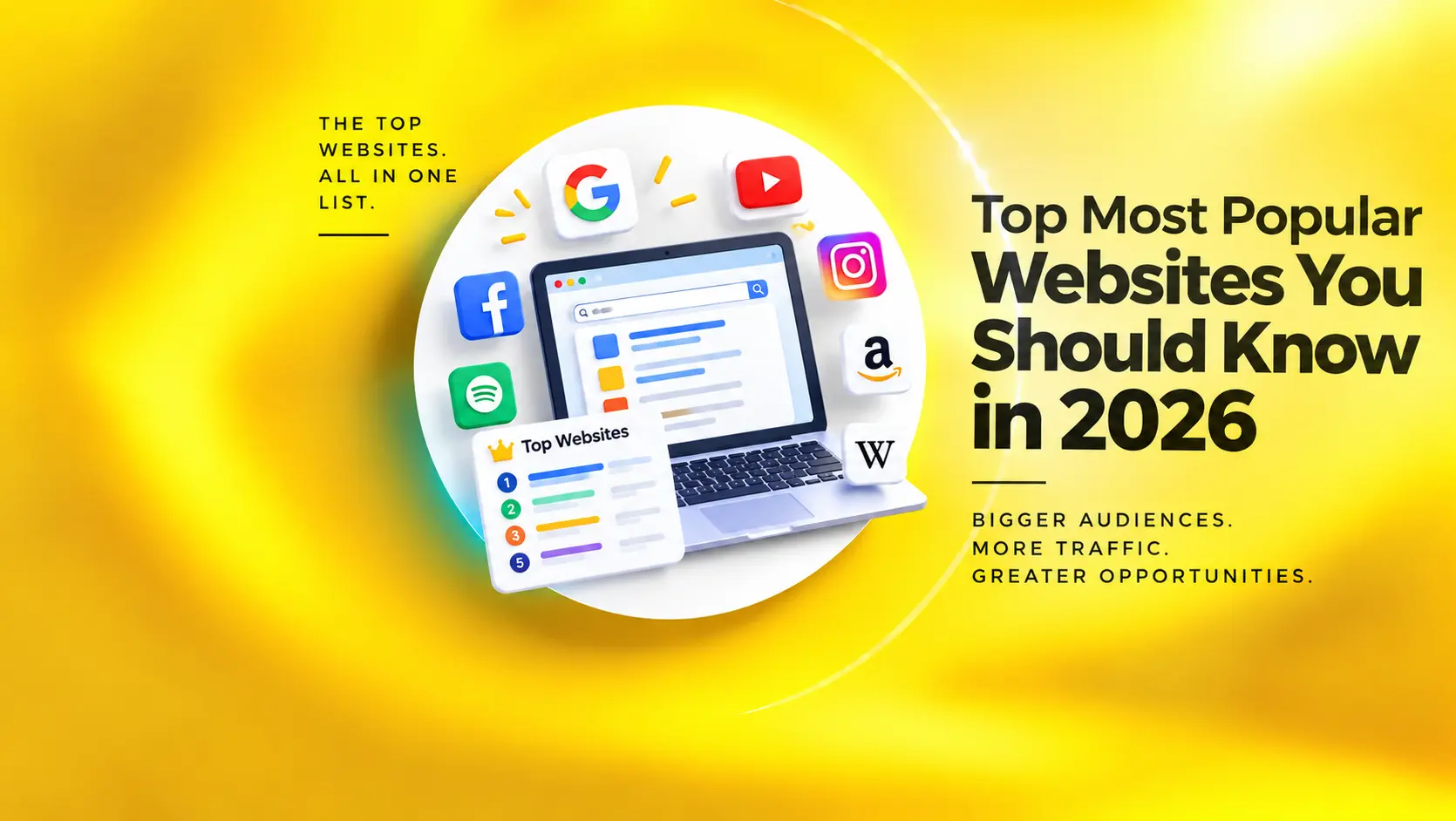
Semrush’s August 2026 U.S. data puts Google comfortably at the top, followed by YouTube, Reddit, and Facebook.
| Rank | Website | Monthly Visits | Annualized Visits |
| 1 | 24.54B | 294.48B | |
| 2 | YouTube | 10.43B | 125.16B |
| 3 | 2.57B | 30.84B | |
| 4 | 2.37B | 28.44B | |
| 5 | Amazon | 692.46M | 8.31B |
| 6 | TikTok | 530.34M | 6.36B |
| 7 | Bing | 496.31M | 5.96B |
| 8 | Walmart | 491.63M | 5.90B |
| 9 | Temu | 485.98M | 5.83B |
| 10 | Weather.com | 471.60M | 5.66B |
| 11 | 436.60M | 5.24B | |
| 12 | USPS | 396.26M | 4.76B |
Annualized visits are monthly estimates multiplied by 12. They are not unique annual users. Look beyond the rankings and the list gets more interesting.
Google is where people search. YouTube captures video discovery. Amazon and Walmart capture shopping intent. Reddit brings community-driven research, while LinkedIn sits heavily in the professional and B2B space.
So the real story isn’t simply who gets the most visits. It’s why people visit in the first place.
Why These Websites Attract Millions Every Day
The biggest websites have something in common. They make the thing users came to do ridiculously easy.
Need an answer? Search Google. Want to watch something? Open YouTube. Want to compare products? Head to Amazon. Want to know whether other people have had the same problem? Reddit probably has a 47-comment thread about it already.
That’s the secret sauce: less friction, more usefulness.
They solve a clear problem
The purpose is usually obvious. Search engines help people find information. E-commerce platforms help people shop. Social networks help people connect. Streaming platforms help people find something to watch.
Users don’t need a tutorial before using them. That’s a pretty powerful UX strategy in itself.
They become habits
The biggest websites aren’t relying on one viral campaign to bring people back. People return because the platform has become part of their routine.
You check Google when you need something. You check social feeds when you’re bored. You open Amazon when you’re shopping. YouTube can start with “I’ll watch one video” and somehow become an hour-long documentary about something you didn’t even know existed.
That’s repeat behavior doing the heavy lifting.
They keep finding new reasons to be useful
The major platforms rarely stay in one lane. Google has search, Maps, Gmail, shopping, video, cloud services, and more.
Amazon grew far beyond books. YouTube moved from simple video sharing into entertainment, education, product discovery, creator content, and search. More useful features mean more reasons to return.
How Website Design and Functionality Impact Popularity
Getting someone onto your website is one problem. Giving them a reason not to leave is another. This is where UX becomes more than a nice-looking homepage.
Popular websites tend to make basic actions feel almost invisible. Navigation makes sense. Search works. Pages load quickly. Buttons are where users expect them to be. Content doesn’t require detective work.
And then there’s mobile.
According to Semrush’s August 2026 data, mobile made up approximately 68.55% of YouTube’s U.S. web traffic and 57.96% of Amazon’s.
So if your website looks fantastic on a 27-inch monitor but becomes a tiny, slow, impossible-to-navigate mess on a phone, there’s a problem. Your customer isn’t grading your desktop design. They’re trying to complete a task. Usually while holding their phone in one hand.
The Role of SEO and Digital Marketing in Driving Website Traffic
Here’s the awkward part.
Most businesses aren’t Google. People aren’t waking up every morning thinking, “You know what? I should visit this random company’s website today.” They need a reason to find you. That’s where SEO, content marketing, digital advertising, backlinks, and organic search come in.
SEO helps your website appear when people are actively looking for something relevant to your business. Content gives those searches useful answers. Backlinks can build authority. Paid advertising can put your offer in front of the right audience faster.
But none of this should become a race for traffic numbers alone. The goal isn’t “Get more visitors.” It’s “Get more relevant visitors.”
A thousand people who actually need your product can be worth far more than a million people who clicked by accident. That’s the difference between traffic and useful traffic.
Emerging Trends Affecting the Popularity of Top Websites
The websites at the top today won’t necessarily win attention in exactly the same way tomorrow. A few changes are already reshaping how people interact with the web. AI is changing how people search Search is becoming more conversational.
Instead of typing a few keywords and opening several pages, users can increasingly ask questions in natural language and expect a direct answer.
That changes the job for marketers.
Creating a page that simply targets a keyword isn’t enough. Content needs to provide useful, specific information that can satisfy the underlying question.
Personalization is becoming normal
People are getting used to websites that remember what they like.
Product recommendations, customized feeds, location-based results, and personalized content can make a website feel much more relevant. Of course, there’s a fine line.
Recommend something I might like? Great. Recommend the exact thing I bought yesterday? Maybe give the algorithm a coffee break.
Mobile isn’t going anywhere
Responsive design, fast loading times, readable content, simple navigation, and mobile-friendly forms aren’t bonus features anymore.
They’re basic requirements.
If a visitor has to pinch, zoom, wait, reload, and hunt for the menu, they’re probably not staying around to admire your brand guidelines.
Search is becoming more conversational
Voice search, AI assistants, visual search, and natural-language queries are changing how people phrase their searches.
“Best Italian restaurants NYC” is one type of search. “What’s a good Italian restaurant near me that’s open late?” is another. The second one sounds much more like an actual human. Content strategies need to understand that difference.
Understanding the Most Popular Top Visited Websites
The biggest websites aren’t popular simply because they have enormous marketing budgets. They’ve built something people repeatedly need, enjoy, trust, or find useful. That’s the bigger lesson behind website traffic rankings.
For businesses, these platforms offer plenty to study, from UX and mobile optimization to SEO, personalization, content strategy, and user engagement.
But copying Google isn’t the answer.
You don’t need Google’s 24.54 billion monthly visits. You need the people who are actually looking for what you offer.
So instead of asking, “How do we get more website traffic?”, start with something more useful: “Why would the right person choose to visit us?” Once you have a good answer to that, the traffic strategy gets a whole lot easier.
FAQs
- Which website gets the most traffic in the U.S.?
Google is still way out in front. Semrush estimates that Google received around 24.54 billion U.S. visits in August 2026. That’s a lot of “quick searches” that definitely weren’t supposed to turn into a 45-minute research session.
- Why do people keep coming back to the same websites?
Usually, because the website makes something ridiculously easy. Google helps you find an answer, YouTube gives you something to watch, Amazon helps you shop, and Reddit gives you other people’s opinions and experiences. Once a website becomes part of someone’s routine, coming back almost becomes automatic.
- What can my business learn from these high-traffic websites?
You don’t need billions of visitors to borrow their best ideas. Make your website fast, easy to navigate, useful on mobile, and genuinely helpful to the people you’re trying to reach. Then use SEO and good content to make sure those people can actually find you in the first place.